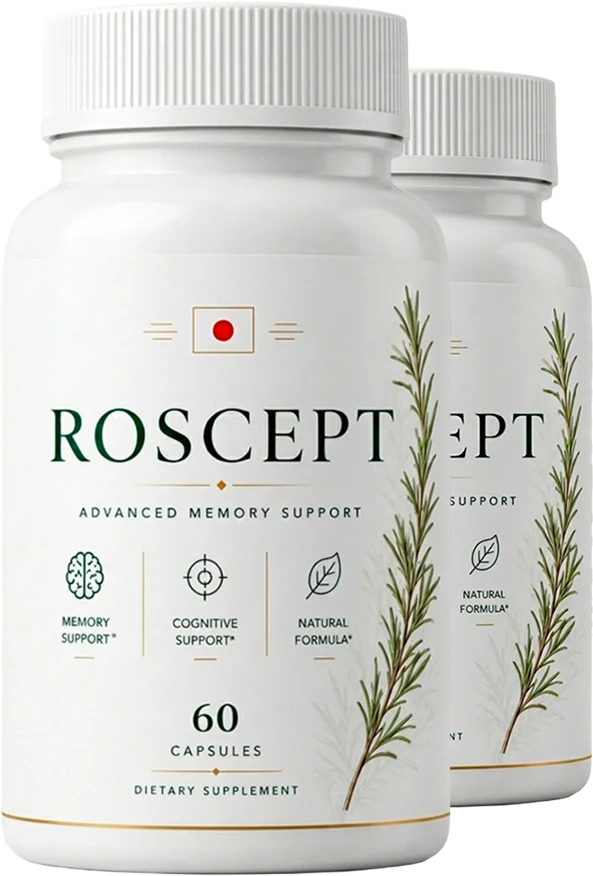
2-Bottle Supply
Try it for 60 days
- Two months of daily use
- 60 capsules per bottle
- Rosemary-based memory support formula
Secure checkout
Six quick questions. No email, no sign-up. You get a score, and the article below adapts to it.
Forgotten names. A word stuck on the tip of your tongue. Walking into a room and blanking on why. Researchers are starting to understand what is happening, and one very ordinary plant keeps showing up in the studies.
It is rarely dramatic. It is the third time this week you searched for your glasses while wearing them. It is re-reading the same paragraph. It is the name of an actor you know perfectly well refusing to surface.
Individually, each one is nothing. Together, they are a pattern worth understanding.
There is a specific kind of frustration that comes with feeling slower than you used to be. Not sick. Not confused. Just... slower. A half-second delay on the name of a colleague. A mental to-do list that leaks items. A conversation where you lose the thread and have to ask, "sorry, what was I saying?"
Most people write it off as stress, or age, or a bad night's sleep. And often that is exactly what it is. But the science of why the brain slows down has moved quickly in the last decade, and it turns out these small lapses share a handful of very physical causes.
Brain fog is not a medical diagnosis. It is the everyday name for a cluster of symptoms: slow recall, poor concentration, mental fatigue, and the feeling that thinking takes more effort than it should. Neurologists tend to break it down into three things going wrong at once.
None of these are switches that flip at a certain birthday. They are dials that turn slowly, which is why the changes creep up rather than arrive.
Tap the ones that apply. This stays on your device.
A common assumption is that memory is fine until it suddenly is not. The data says otherwise. Large longitudinal studies that track the same people for decades find that processing speed and working memory begin a slow, measurable decline in the late twenties to mid-thirties. It is gradual enough to be invisible for years, then noticeable all at once when life gets busier, sleep gets worse, and there is less margin to absorb it.
The good news hidden in that data: because the decline is slow and driven by physical processes, it is also responsive to physical inputs. Sleep, movement, and what you feed the brain all move the needle. Which brings us to the herb.
"There's rosemary, that's for remembrance." Shakespeare, Hamlet, around 1600. Greek students wore it during exams a thousand years earlier.
Rosemary (Rosmarinus officinalis, recently reclassified as Salvia rosmarinus) has been folk-associated with memory for at least two millennia. What changed recently is that researchers started testing it properly, and the results have been consistent enough to be interesting.
To be clear about what this is and is not: these are early, mostly small studies. Rosemary is not a treatment for any disease, and nobody serious claims it is. What the research does suggest is that the compounds in rosemary interact with exactly the three processes (signaling, oxidation, inflammation) that drive everyday cognitive fog.
Rosemary's signature antioxidant. Studied for its ability to protect neurons from oxidative stress and calm inflammatory signaling.
The compound behind rosemary's scent. Blood levels correlated with speed and accuracy on memory tasks in the Northumbria trials.
A polyphenol studied for supporting healthy acetylcholine levels and for its anti-inflammatory activity in brain tissue.
The obvious question: can you just eat more rosemary? Sort of. The problem is concentration and consistency. The amounts used in research are standardized and taken daily. A sprig on roast potatoes twice a month is not the same input, and the compounds that matter degrade with heat and time on the shelf.
This is why the more useful format for most people is a capsule that delivers a consistent, measured amount of rosemary extract every day, ideally as part of a formula built specifically for cognitive support rather than a generic "brain blend" with a pinch of everything.
When our editorial team went looking for a product built around this research, we had a short checklist:
The formula that fit best is called Roscept, labeled as Advanced Memory Support. It is built around rosemary, comes in a 60-capsule bottle, and is sold in one, three, and six-bottle supplies so you can commit to the timeframe the research actually points to.
We do not manufacture Roscept. This page contains links to the product's official checkout, and Elevate Enzymes may receive compensation on purchases. That relationship does not change the research summarized above, which you can verify independently.
Rosemary-based cognitive support in a simple daily capsule. Choose the supply that matches how long you want to give it.
Try it for 60 days
Secure checkout
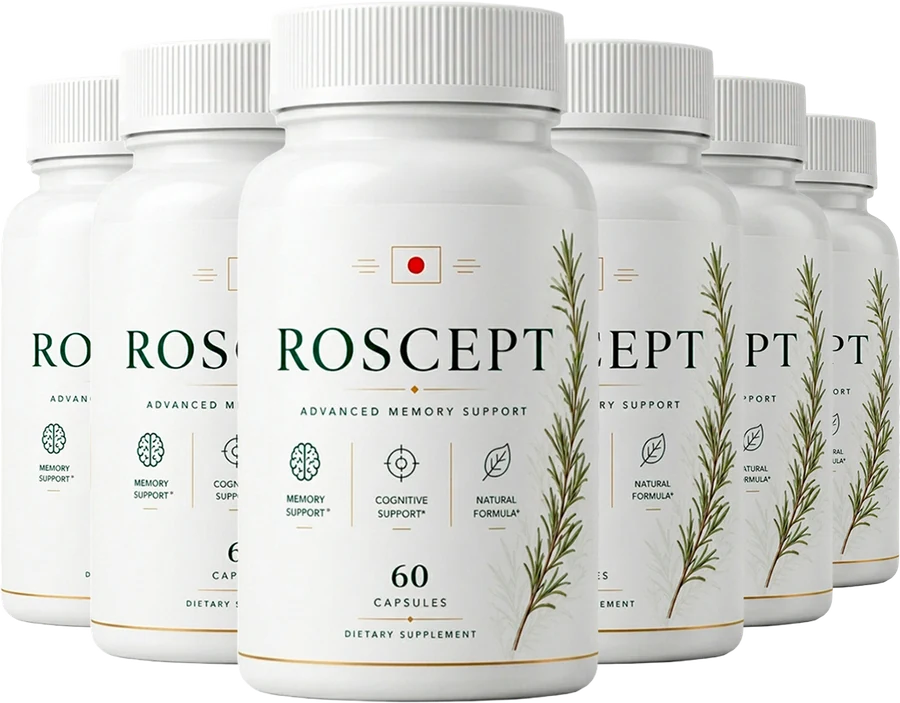
The full commitment
Secure checkout. Ships in discreet packaging.
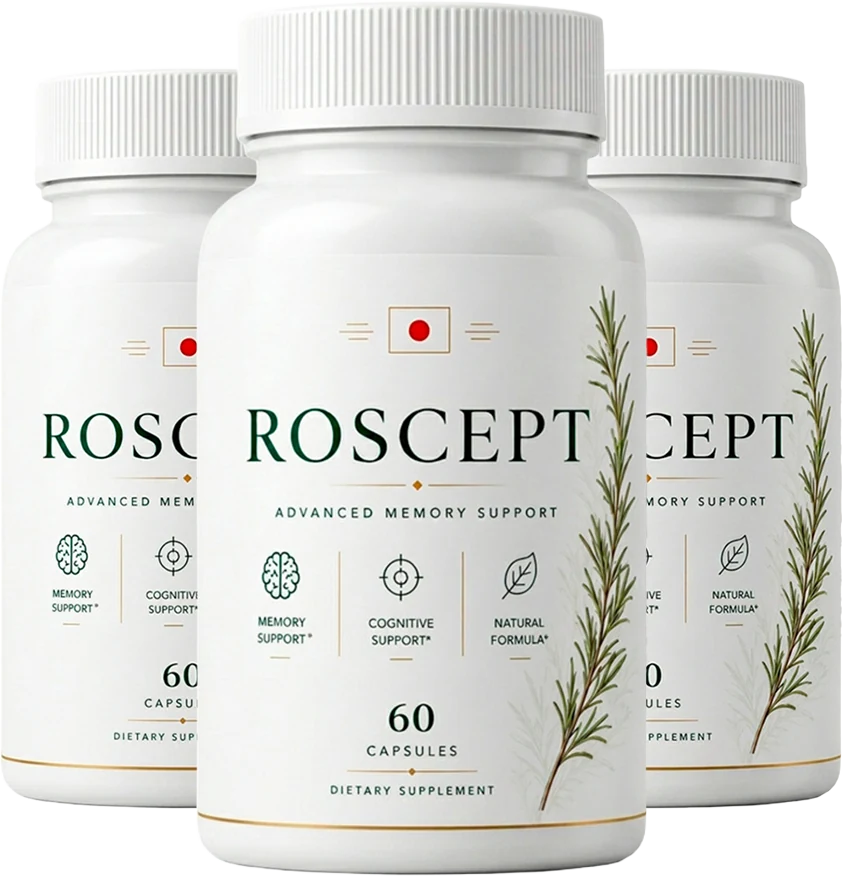
A proper 90-day trial
Secure checkout
"Proven" is a strong word and we avoid it. Several small human studies and a larger body of lab and animal research point in a consistent direction, but rosemary is a dietary supplement, not a medication, and results vary from person to person.
The studies that reported effects used daily intake over several weeks. That is why the 3 and 6-bottle supplies exist. A single bottle is a reasonable way to check tolerance, but it is a short window to judge results.
No. Rosemary compounds are not stimulants in the way caffeine is. The goal is to support the underlying processes, not to mask tiredness with a jolt.
Ask your doctor or pharmacist before adding any supplement, especially if you take blood thinners, blood pressure medication, or are pregnant or nursing. This page is educational and is not medical advice.
To the product's official secure checkout, where you can see current pricing, shipping options, and the seller's guarantee terms before entering any payment details.